Algal giant virus carries a tandem potassium channel gene of apparent viral origin
 S
An international team has identified a gene for a tandem potassium channel in a DNA virus that infects marine algae. Experiments showed that the encoded protein behaves as a potassium channel, and evolutionary analysis indicated that the gene is probably of viral origin rather than copied from a host. The work, led by Oliver Rauh and colleagues, appears in Proceedings of the National Academy of Sciences.
A channel family with an unclear past
Tandem potassium channels, also called two-pore-domain channels, carry potassium ions across cell membranes. In humans they help to set the resting membrane potential and so influence how readily nerve cells fire. Their architecture is unusual: whereas other potassium channels are assembled from four separate pore-forming subunits, tandem channels have two of those subunits fused into a single chain.
That design has long raised an evolutionary puzzle. Simpler potassium channels have recognisable counterparts in bacteria, but no bacterial precursors of the tandem type have been found. Where the fused architecture came from has therefore remained uncertain.
What the researchers found
The team reports that the genome of a virus infecting marine algae contains a gene for a tandem potassium channel. The group included researchers from the Department of Biology at TU Darmstadt and the Department of Natural Sciences at Bonn-Rhein-Sieg University of Applied Sciences. Functional experiments showed that the viral protein has the properties expected of a potassium channel, according to Rauh, who works in the DFG research network CytoTransport at the Bonn-Rhein-Sieg university.
The virus belongs to the mimiviruses, a group of giant viruses with unusually large genomes for viral particles.
Not a borrowed gene
The most notable result concerns the gene's ancestry. Viral genes that resemble cellular ones are usually explained as host genes captured during infection. The authors compared the viral channel with known tandem potassium channels and concluded that this explanation does not fit here. The gene appears to have arisen in the virus itself.
Gerhard Thiel, a professor of biology at TU Darmstadt, links the result to a developing view that giant mimiviruses have played a central part in the evolution of proteins in higher organisms. If a complex channel architecture can originate in a virus, viruses may have supplied genes to cellular life, and not only taken them from it.
Why it matters and what remains open
For evolutionary biologists, the finding offers a candidate source for a protein family whose origins have been hard to trace. For biophysicists and molecular biologists, it adds to evidence that giant viruses hold a rich supply of unusual proteins. Another group has already found a light-controlled ion channel in the same virus; that kind of channel is used in optogenetics, a field recently honoured with a Nobel Prize.
Several questions are not addressed in the source material. These include how closely the viral channel's properties match those of animal tandem channels, what role it plays when the virus infects an algal cell, and how robust the origin conclusion is as more giant virus genomes are sequenced. The statement that the gene is of viral origin rests on evolutionary analysis, which is sensitive to the sequences available for comparison. Wider sampling of viral and cellular channel genes would test it.
The study is likely to prompt closer searches of giant virus genomes for other complex protein families, and structural and electrophysiological work on the viral channel could clarify how it relates to its counterparts in animals.
Source: Giant virus yields potassium channel gene that illuminates complex protein evolution (Phys.org, 1 November 2026).
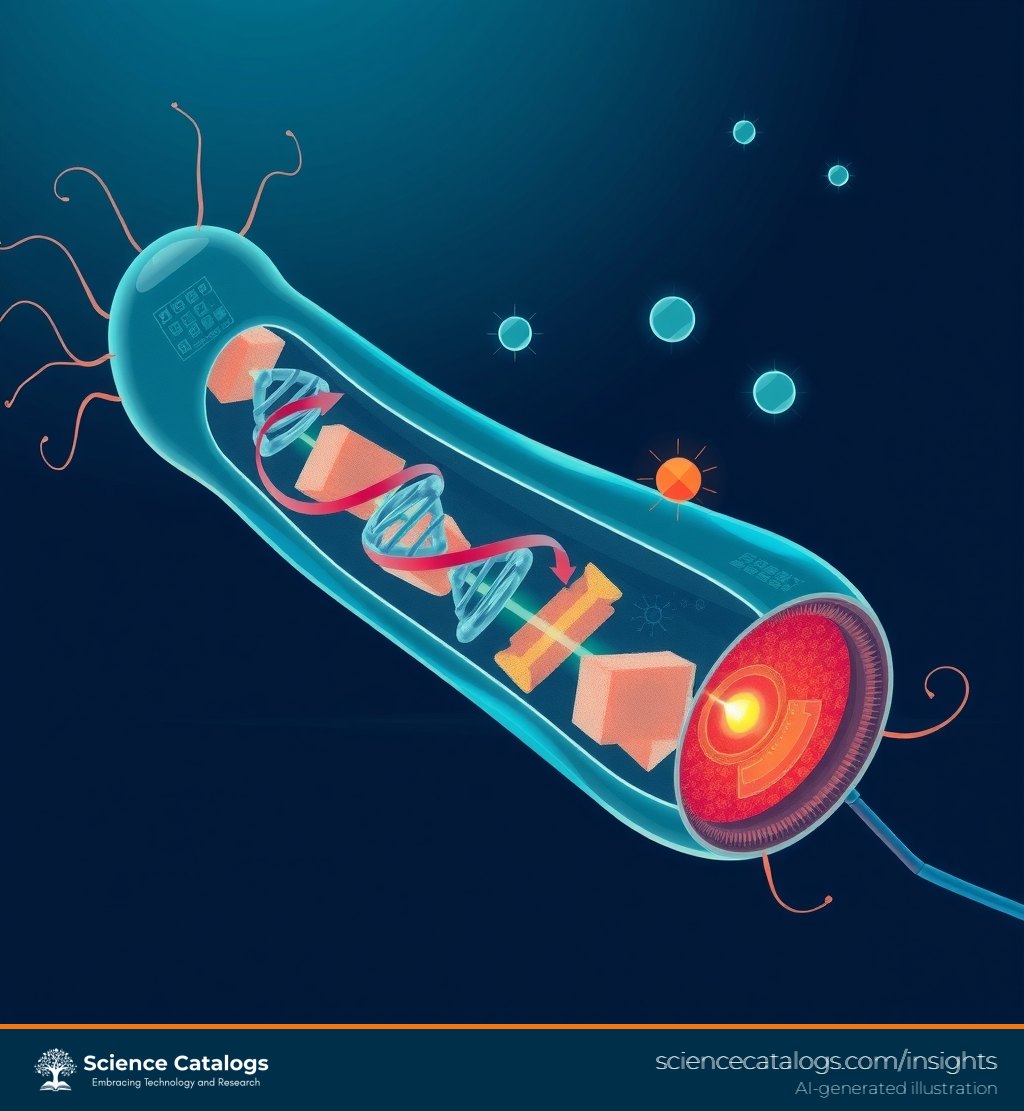
Image: AI-generated illustration.
Working on this topic? Find a journal for your research or join the discussion on Scholars Post.