SmartPE raises prime editing efficiency in tomato, soybean and rapeseed
 S
Researchers at the Chinese Academy of Sciences have developed SmartPE, a prime editing system that works more efficiently in several dicot plants. By placing deliberate mismatches in the templates of paired guide RNAs, the team raised average editing activity at four Arabidopsis targets more than sixfold, to about 10%. The work, led by Gao Caixia at the Institute of Genetics and Developmental Biology, appeared in Nature Plants on 28 October.
The problem with prime editing in dicots
Prime editing can install base substitutions and small insertions or deletions without cutting both DNA strands and without a donor template. It also tends to produce few off-target events and unwanted byproducts. In dicot plants, however, efficiency is low and varies widely from one target site to another, which has limited its use in crops.
Building the system in stages
The first step was to raise expression of the editor. The researchers inserted cis-regulatory elements between the promoter and the Cas9 coding sequence. The element called START worked best, increasing transcript levels 2.1-fold and editing efficiency at four Arabidopsis targets by about 1.8-fold.
A dual-pegRNA strategy did not improve matters on its own. The team reasoned that tight pairing between the reverse transcriptase template (RTT) and genomic DNA might hinder reverse transcription, and that mismatch repair suppresses prime editing. They therefore introduced complementary mismatched bases into the RTTs of both pegRNAs. Combined with the regulatory element and an engineered reverse transcriptase, this produced SmartPE.
Where the mismatches go
Arrangement mattered. Continuous mismatches, or mismatches spaced 3 bp apart, gave the highest efficiency, up to 20%. Spacing of 6 bp or more reduced it sharply, a pattern that differs from single-pegRNA systems. Mismatches at both ends of the editing window helped, whereas those in the middle did not, which hints that placement may affect how reverse transcription begins.
In human U2OS and HeLa cells, the mismatch repair-inhibiting SB protein boosted single-pegRNA editing but not SmartPE. This suggests the two approaches depend on different repair pathways, although the authors state that the molecular mechanism still needs to be clarified.
Results across species
In protoplasts, the cell-based test system used for the screening:
- six of nine tomato targets exceeded 10% efficiency;
- nine of 11 soybean targets exceeded 5%;
- five rapeseed targets reached or exceeded about 10%.
Conventional prime editing was nearly inactive at some of these sites. Using synonymous substitutions to create the mismatches, the team made single amino-acid changes in soybean and tomato at efficiencies 1.6 to 11.1 times higher than before.
In stable transformation, SmartPE gave homozygous (7.3%) and heterozygous (12.5%) edits at the SlOR2 locus in tomato hairy roots. Standard prime editing produced only heterozygous edits (1.0%) and chimeras. In Arabidopsis and tomato, SmartPE achieved seamless insertions of a FLAG tag, an enhancer and recombination sites at up to 32% efficiency, including 17% co-editing at two targets.
Limits and next steps
The results are not uniform. In soybean, only chimeric plants have been obtained so far, and the authors say this needs further study. Much of the screening was done in protoplasts, which do not always predict outcomes in whole regenerated plants, and the mechanism behind the mismatch effect remains unresolved.
Even so, the empirical rules on mismatch density and distribution give crop researchers a practical starting point for designing pegRNAs in dicots. Further work will probably focus on the underlying repair pathways, on recovering non-chimeric edited soybean plants, and on testing the system at more loci and in more species.
Source: Scientists develop new system to boost prime editing in dicot plants (Phys.org, 31 October 2026).
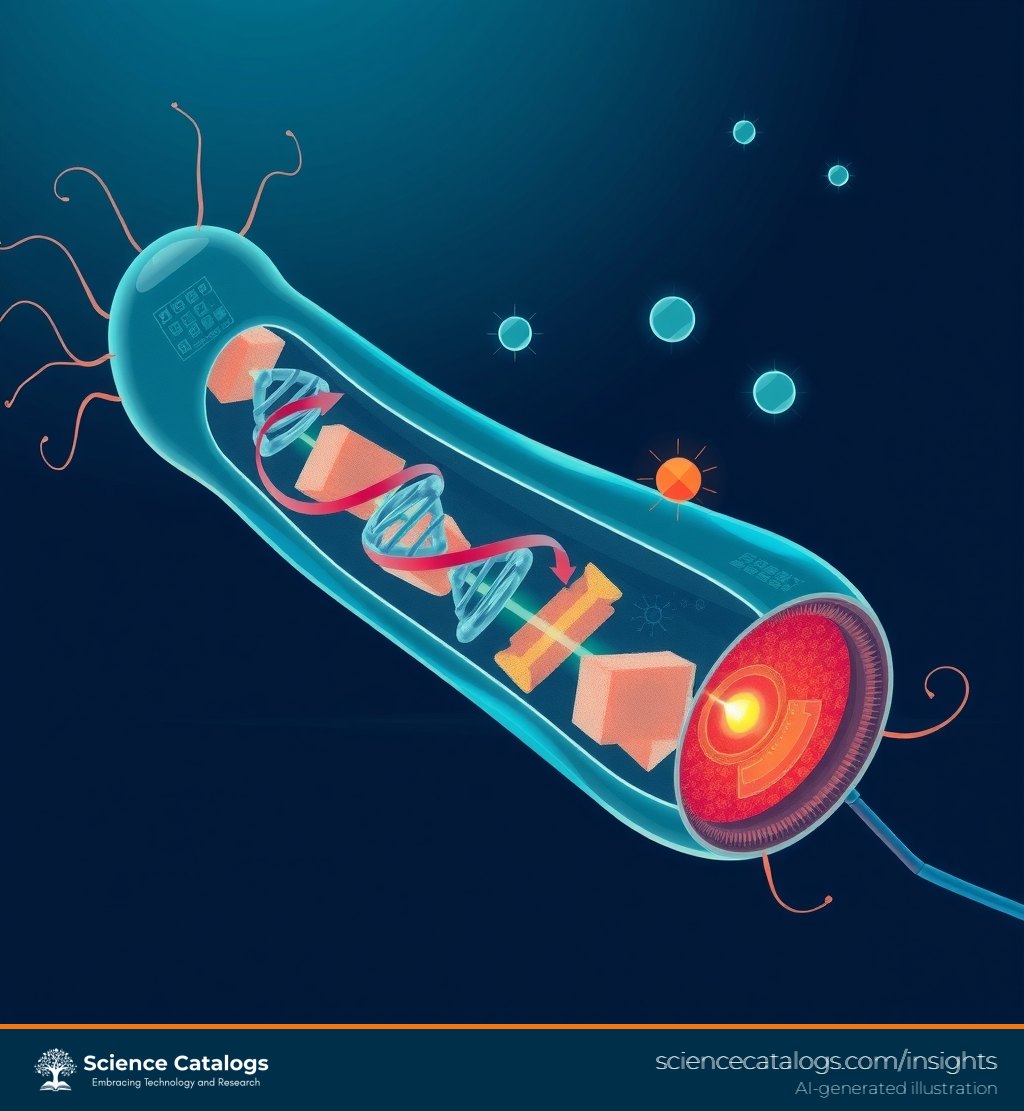
Image: AI-generated illustration.
Working on this topic? Find a journal for your research or join the discussion on Scholars Post.