Radio flares may help trace the origins of high-energy cosmic neutrinos
 S
Radio telescopes may offer a way to identify where high-energy astrophysical neutrinos come from, according to a study in The Open Journal of Astrophysics led by Yjan Gordon and colleagues. The team found that neutrino detections by the IceCube Observatory coincide with brightening radio sources in the same patch of sky more often than chance would predict. The statistical evidence remains modest, and further data are needed to settle the matter.
A particle that rarely interacts
Neutrinos carry almost no mass and do not feel electromagnetism. They interact only through the weak interaction, which acts over distances smaller than an atomic nucleus, so almost all of them pass through matter untouched. Astrophysical neutrinos have been detected since the 1960s, mostly from the Sun and, in at least one case, from a supernova.
IceCube uses a large volume of Antarctic ice at the South Pole as its detector. Given enough time, a few neutrinos collide with water molecules, and sensors pick up the radiation released. The observatory has recorded astrophysical neutrinos hundreds of thousands of times more energetic than those seen earlier. Because neutrinos are so reluctant to interact, they can also carry information out of dense environments that light cannot escape.
The gamma-ray puzzle
Quasars, powered by supermassive black holes, are leading candidate sources. In 2017, IceCube registered a neutrino arriving from the direction of the quasar TXS 0506+056 while another telescope saw a gamma-ray outburst from the same object. Since the particle decays that produce neutrinos should also yield gamma rays, such a coincidence was expected.
That is a single object, however, and evidence for a broader link between gamma-ray flares and neutrinos has been scarce. One possible explanation is that gas and dust around a black hole absorb gamma rays before they reach Earth. Radio waves pass through such material far more easily.
What the radio data show
The Very Large Array Sky Survey (VLASS), begun in 2017, tracks how radio emission from the sky changes in brightness. The team had previously shown that most variable VLASS sources are quasars of the type already linked to IceCube neutrinos. Comparing the timing of radio flares with neutrino arrival times, they found a correlation.
- Radio flares appear to be associated with only about 13% of IceCube's astrophysical neutrinos, so most remain unexplained.
- More than 90% of the radio outbursts potentially tied to neutrinos are not detected by gamma-ray telescopes.
If the second figure holds, radio observations could reveal neutrino sources that gamma-ray astronomy misses.
Limits and next steps
The authors are cautious. There is roughly a 1-in-30 chance of seeing a correlation this strong if neutrinos and radio flares were unrelated, comparable to tossing a coin and getting five heads in a row. Particle and astrophysicists generally look for odds nearer one in a million before treating a result as established.
The team expects additional observations within the next few years, which should show whether the signal strengthens or fades. If it survives, the finding would help establish which classes of object produce high-energy neutrinos, and would give researchers a way to probe the physics inside them. It would also give radio astronomers a larger role in multimessenger work that combines neutrino, light and other signals.
Source: Figuring out where cosmic neutrinos come from is tricky—radio telescopes could help find 'ghost particles' origin (Phys.org, 31 October 2026).
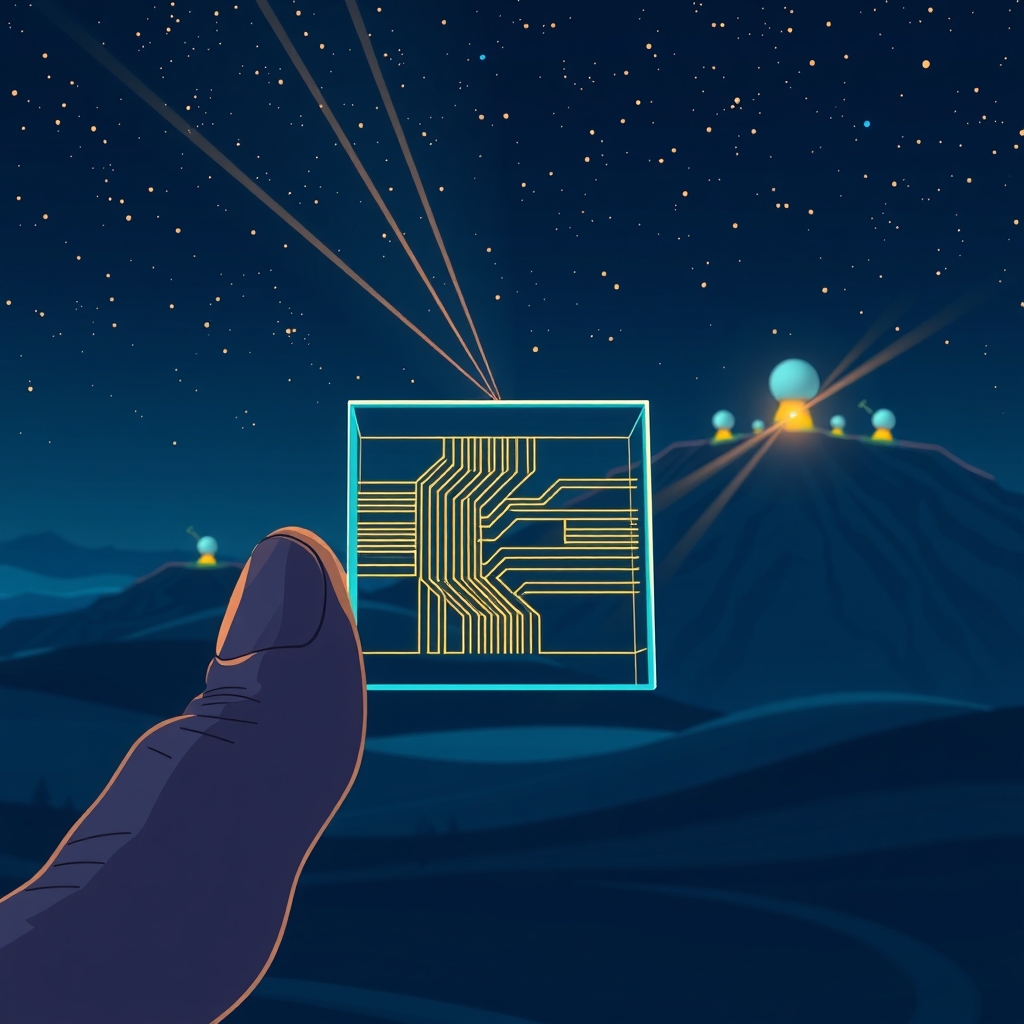
Image: AI-generated illustration.
Working on this topic? Find a journal for your research or join the discussion on Scholars Post.