Glass photonic chip combines light from CHARA Array telescopes in first on-sky test
 S
A photonic chip made at Heriot-Watt University has, for the first time, combined starlight from separate telescopes during real observations at the CHARA Array in California. The glass device, only a couple of centimetres across, performed a task that has normally relied on bulky arrangements of mirrors and lenses. The results are reported in Monthly Notices of the Royal Astronomical Society.
Why combining telescopes matters
Optical interferometry links several telescopes so that they behave like one much larger instrument, giving a sharper view than any single dish or mirror could provide. The difficulty is that the light from each telescope must be brought together with extreme precision. The CHARA Array, run by Georgia State University, has six telescopes that can be linked in this way.
Conventional beam combiners use free-space optics, which take up room and need careful alignment. The new approach moves much of that work onto a chip, in the same way that integrated circuits guide electrons through tiny pathways.
How the chip works
The device was developed at the Institute of Photonics and Quantum Sciences at Heriot-Watt by Professor Robert Thomson and Dr Aurélien Benoît. Narrow channels are written inside a specialised glass using ultrafast-laser inscription. According to the team, the glass opens up a spectral range that had not previously been explored with this fabrication method. The channels merge the incoming light so that the separate telescopes work together as one.
The chip sits inside an instrument called CHARIOT, designed as a testbed for photonic technologies. Chips can be removed and swapped within hours, so improved designs can be tried quickly. The study title refers to a K-band integrated optics beam combiner, and describes the work as the first paper in a series reporting the first on-sky fringes for CHARIOT.
What the observations showed
During observing campaigns in 2024 and 2025, CHARIOT combined light from telescopes at the CHARA Array and recorded signals from a range of stars. The researchers say this demonstrated the precision needed for advanced astronomical work. The instrument also detected stars fainter than those reachable with the system it replaced. The source does not give further performance figures, such as the number of stars observed or the faintness limits, so the scale of that improvement cannot be judged from the summary alone.
The project brought together Heriot-Watt University, the universities of Cologne and Potsdam, and the CHARA Array. The lead author is Dr Aline Dinkelaker of the Leibniz Institute for Astrophysics Potsdam. She said the observations show photonic technologies can deliver the performance needed for frontline astronomical research.
Implications and next steps
The work belongs to astrophotonics, a field that applies light-based technologies to astronomical problems. For instrument designers, a chip-based combiner offers a route to smaller, more stable and more easily upgraded interferometers. The testbed design also lets new photonic components be validated on real stars without rebuilding the instrument.
The researchers suggest the technology could eventually contribute to studies of how planetary systems form and evolve, and to the direct detection and characterisation of planets around other stars. These are long-term aims rather than results of the present study, which is a demonstration of operation under real observing conditions. Thomson notes that the programme began more than 15 years ago, moving from fundamental research and laboratory tests to operation at a leading facility. Further papers in the series are expected to report additional chip designs and performance results.
Source: Tiny photonic chip links telescopes together to view the universe in 'astonishing' detail (Phys.org, 31 October 2026).
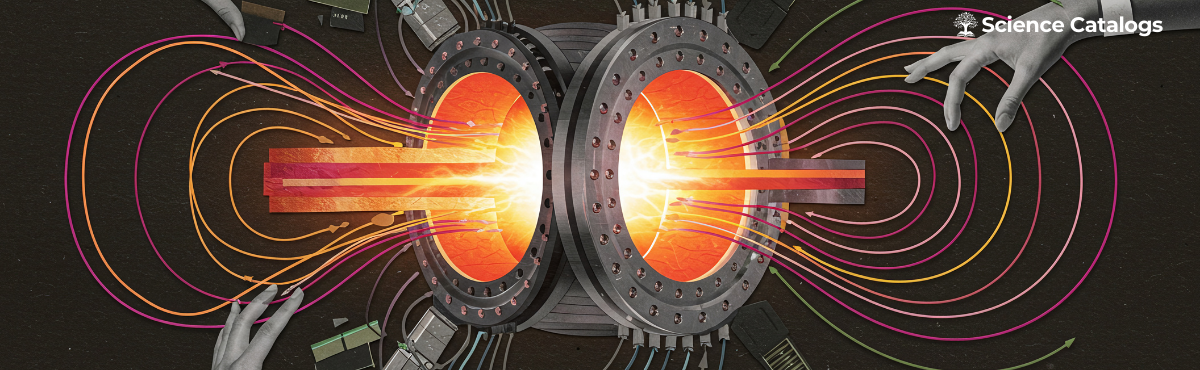
Image: AI-generated illustration.
Working on this topic? Find a journal for your research or join the discussion on Scholars Post.