Rock chemistry pins a shift in Earth's crust to 2.5 billion years ago
 S
A chemical signature of very ancient crust is common in rocks older than 2.5 billion years but absent from younger ones, according to researchers at Curtin University in Australia. They interpret the abrupt disappearance as a marker of a change in how Earth's crust was made and reworked, towards a system resembling modern plate tectonics. The study appears in Proceedings of the Royal Society A: Mathematical and Physical Sciences.
The problem of dating plate tectonics
Plate tectonics shapes continents and ocean basins, and over deep time it helps regulate climate and the planet's magnetic field. Establishing when it began has been difficult. The process recycles crust into the interior, so it steadily erases the rocks that might record its own origins.
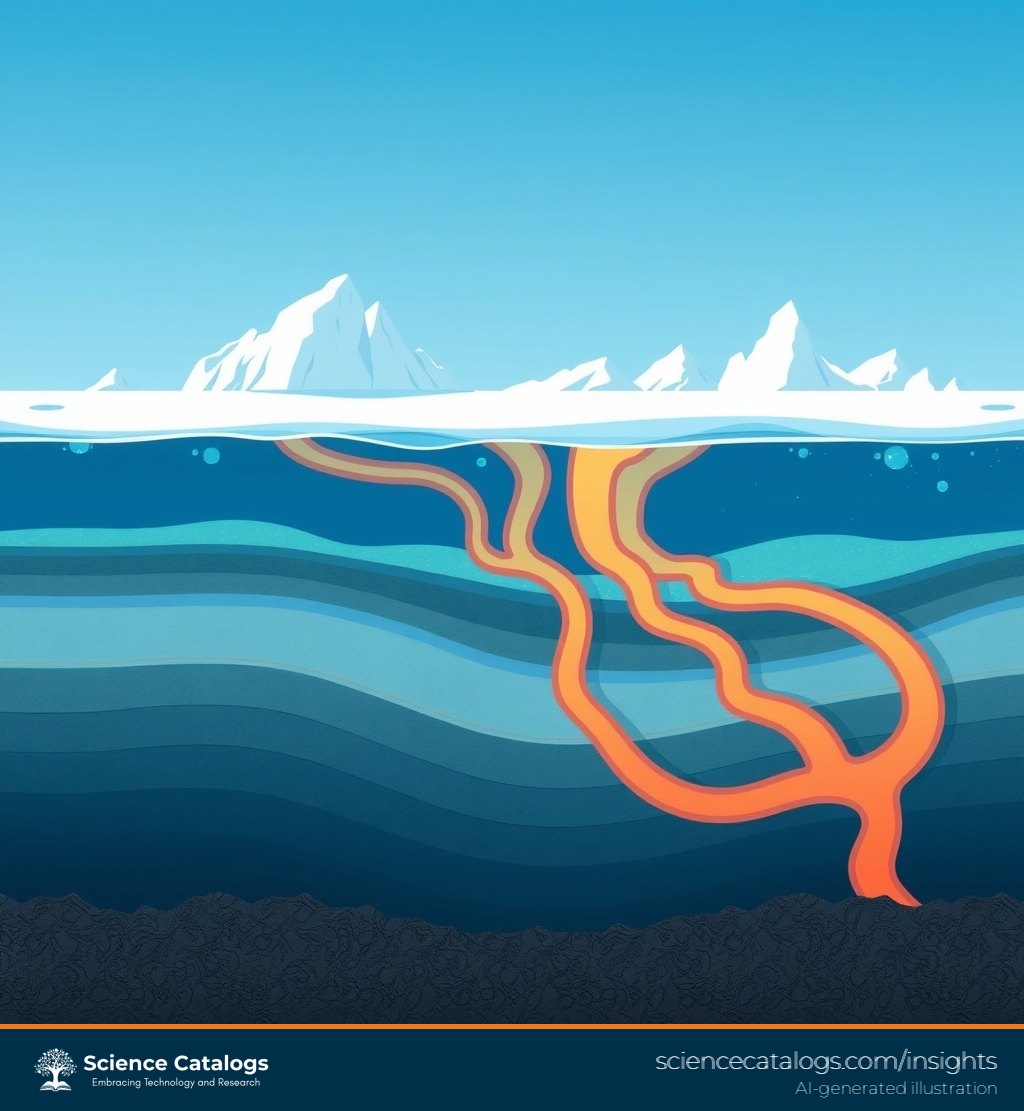
The Curtin team took a different approach. Rather than looking for direct signs of plate motion, they looked for a chemical trace left when new crust forms by melting older rock. Such melting leaves a distinctive fingerprint in the new material, which can be used to trace its ancestry.
A fingerprint that stops
Lead author Dr Janne Liebmann, a research fellow in Curtin's Timescales of Mineral Systems Group, and colleagues searched for this signature in thousands of rocks from around the world. The samples span almost four billion years of Earth history.
In rocks older than about 2.5 billion years, the signature appeared consistently. This indicates that those rocks were derived from a pool of ancient crust that had formed around four billion years ago. After 2.5 billion years ago, it vanished from the record. Despite the size of the dataset, the team did not see it again.
From reworking in place to large-scale recycling
Professor Chris Kirkland, a co-author from Curtin's School of Earth and Planetary Sciences, describes the pattern as a transition between two regimes. In the earlier one, ancient crust could be melted and reworked repeatedly in place. In the later one, crust was moved and recycled on a much larger scale, as it is today.
Kirkland says the result offers the clearest geological evidence so far for when the modern tectonic system began operating. He also notes that it bears on a feature separating Earth from tectonically inactive planets such as Venus and Mars.
Why it matters, and what remains open
For researchers studying early Earth, the main value lies in the kind of evidence. A sharp, globally consistent change in crustal chemistry gives a time marker that can be tested against other records, such as those for continental growth, atmospheric evolution and the history of the magnetic field. Proposed start dates for plate tectonics have varied widely, and a signature tied to a specific moment could help narrow that range.
Some caution is appropriate. The source describes the loss of an ancient reservoir as a sign of changed crustal processes, but it does not detail the specific chemical system used or the geographical coverage of the samples. The rock record is also incomplete, and the interpretation rests on what survives. Independent datasets, and comparison with other geochemical and structural indicators of tectonic style, will be needed to confirm that the shift reflects a global change in geodynamics rather than a sampling effect.
The paper is titled "Loss of ancient crustal reservoirs marks a shift in Earth's geodynamic regime" (DOI: 10.1098/rspa.2026.0587).
Source: Ancient rocks reveal when Earth's tectonic engine 'switched on' (Phys.org, 11 November 2026).
Image: AI-generated illustration.
Working on this topic? Find a journal for your research or join the discussion on Scholars Post.