Riemann hypothesis proof, developed with Claude, reported correct by independent checkers
 S
Levent Alpöge, a mathematician at Anthropic, posted a proof of the Riemann hypothesis on 20 November, saying he developed it together with the company's AI tool Claude. Within a day, a joint statement from the Lean Focused Research Organization and the Mathlib Initiative expressed full confidence that the proof is correct. Mathematicians are now working to understand an argument that runs to roughly 250,000 pages.
What the hypothesis says
Posed in 1859, the Riemann hypothesis concerns the Riemann zeta function and the values at which it equals zero. These zeros are closely tied to the distribution of prime numbers, which look scattered along the number line but follow a hidden pattern. The hypothesis states that a particular infinite set of zeros all lie on one line. If so, it pins down how many primes exist below any given number.
Many results in number theory and beyond are conditional on the hypothesis being true, so a proof would turn those conditional statements into established theorems. Alpöge also claims to have proved the generalised Riemann hypothesis, which extends the statement to related functions.
How the work was done
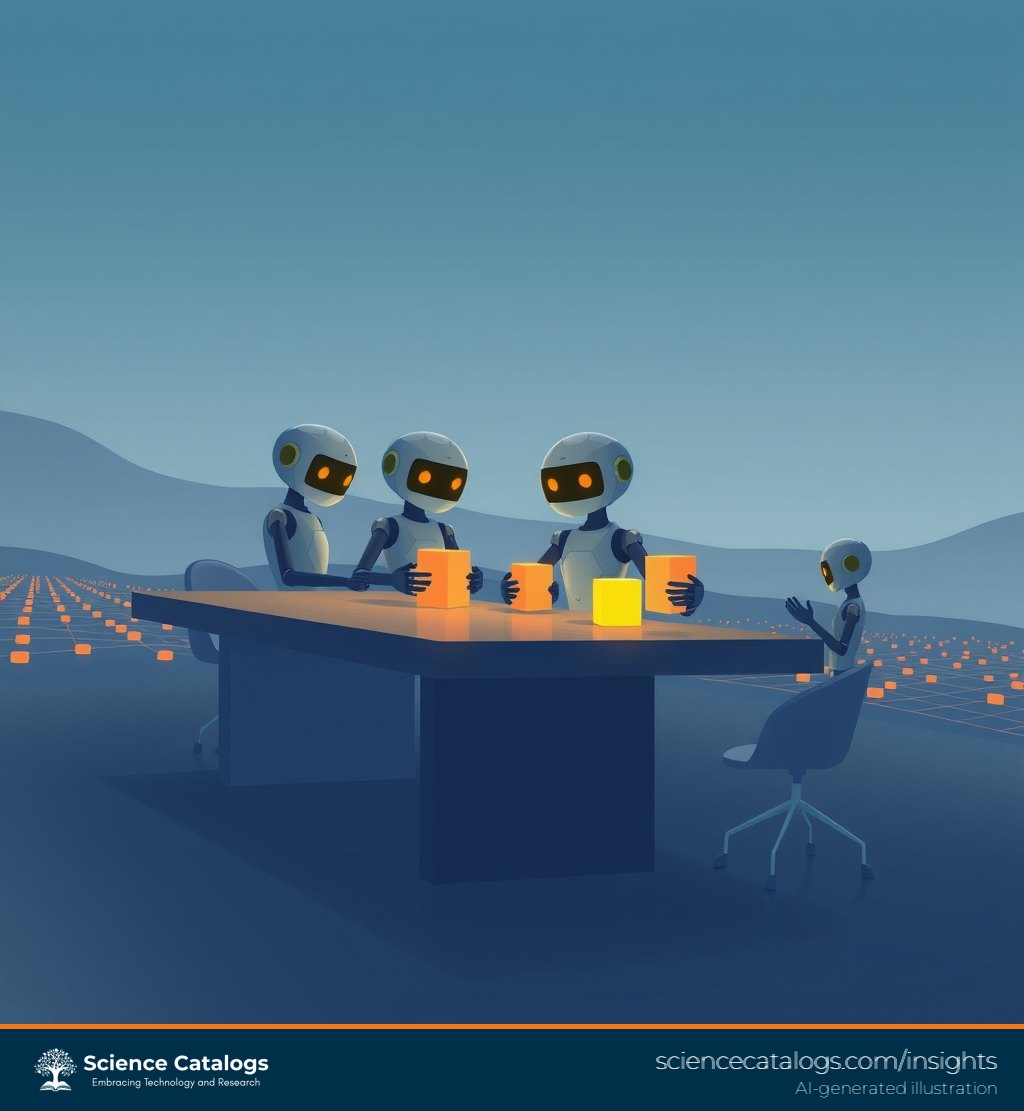
According to Science News, Alpöge worked back and forth with Claude for six weeks rather than requesting a finished proof. Claude operated as an AI agent able to call on outside tools. It checked its reasoning with Lean, software that translates mathematical arguments into code so that each logical step can be verified mechanically. It also drew on Mathlib, a library of known results already formalised in Lean. The exact version of Claude involved has not been disclosed.
Bryna Kra of Northwestern University stressed that this was not AI acting alone. The model had learned from the work of many human mathematicians, and Alpöge is an experienced researcher who steered the process. Ken Ono of Axiom Math and the University of Virginia noted the proof draws on many areas of mathematics, and doubted that one person could hold all of its ideas in mind.
Reactions and disagreement
Ono described the result as an earthquake for mathematics. Alpöge himself wrote that Claude moved well ahead of him near the end of the project.
Not everyone is persuaded of the wider lessons. The Association for Human Mathematics said in a statement on 20 November that no human can claim responsibility for the proof, and that no mathematician can be fully certain of its correctness. Cognitive scientist Gary Marcus of New York University argued that strength at mathematics does not imply similar success in open-ended areas such as biology, business or robotics, where answers cannot be checked so cleanly.
Kra drew a contrast with a recent OpenAI result on a puzzle concerning the Navier-Stokes equations, which was produced largely without human intervention. In her view, the Riemann work differs because a named mathematician can stand behind it.
Limits and next steps
The source does not say whether the proof has been submitted to a journal or has passed formal peer review. The checking reported so far comes from the Lean and Mathlib groups and from independent mathematicians, and the human-readable account of the argument is still being prepared. Until that exists, much of the proof's content, and the question of which ideas it relies on, remains opaque to most of the community.
The immediate work is therefore interpretive: translating a machine-verified argument of enormous length into a form that people can read, teach and build upon. Researchers will also be looking at what the proof implies for results that assumed the hypothesis, and at how far the human-AI workflow, with formal verification at its core, can be applied to other open problems. Kra expects the result to raise more questions than it settles.
Source: Math’s holy grail, the Riemann hypothesis, appears solved with AI’s help (Science News, 24 November 2026).
Image: AI-generated illustration.
Working on this topic? Find a journal for your research or join the discussion on Scholars Post.