Niobium phosphide nanoribbons outperform copper at the smallest chip-wire scales
 S
Researchers at Stanford University have shown that nanoribbons of niobium phosphide (NbP), a topological semimetal, conduct electricity better and more efficiently than copper at the narrowest widths. The study, published in Nature, found that the material's resistivity falls as the ribbons get thinner, the opposite of what happens in copper. The effect was seen at room temperature.
Why copper struggles at small sizes
A modern chip can contain around 100 kilometres of copper wiring linking billions of transistors, and the finest lines are more than 1,000 times thinner than a human hair. At these dimensions copper becomes increasingly resistive, wasting energy at a time when demand for computing is rising sharply because of artificial intelligence.
Senior author Eric Pop, professor of electrical engineering at Stanford, compares the problem to water moving from a pipe into a straw. In a very narrow conductor the surfaces matter far more than the bulk, and electrons scatter off rough walls, which raises resistance.
What the team built and measured
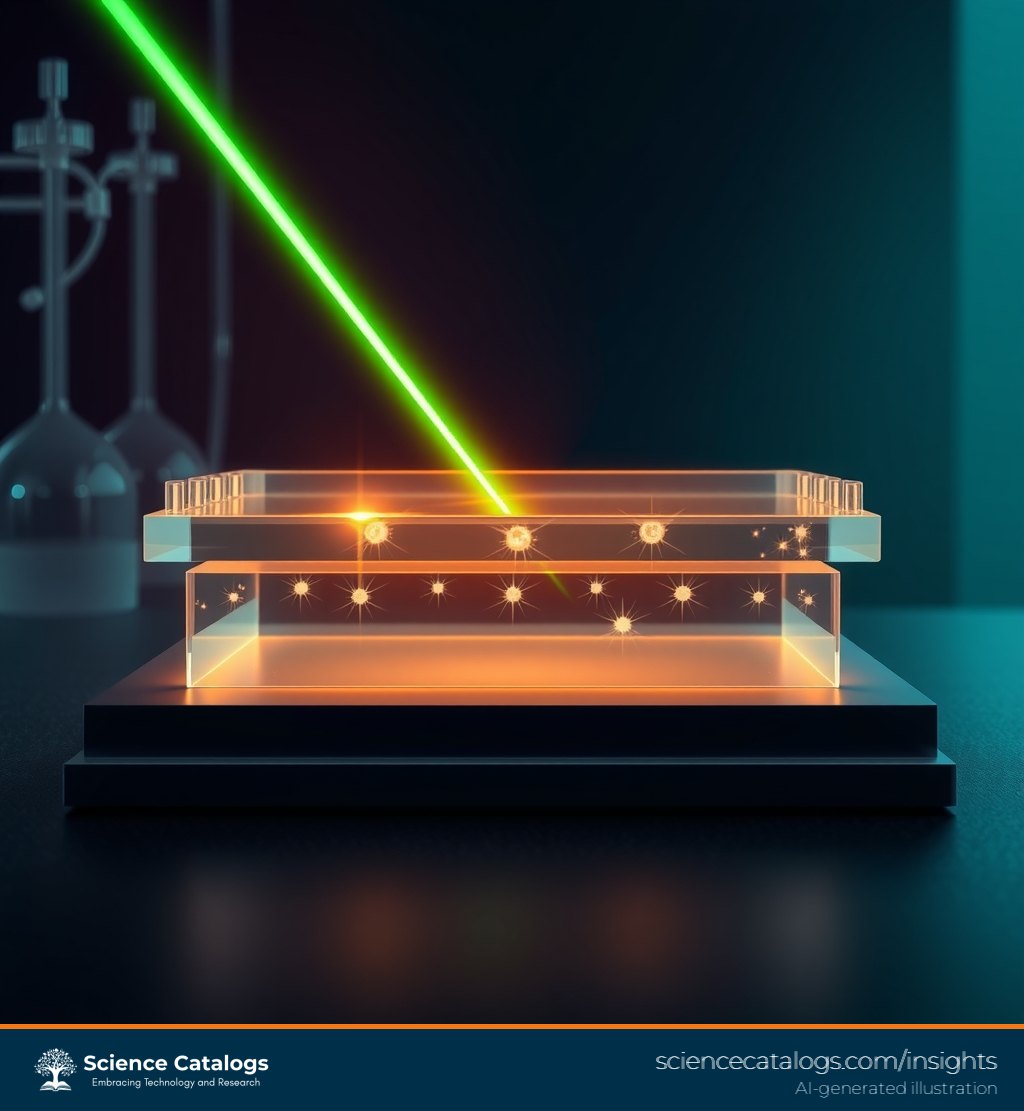
The researchers patterned flat NbP nanoribbons as narrow as 5-6 nanometres and about 1.5 nanometres thick. Sydney Fultz-Waters, a graduate student in materials science and engineering, produced the semimetal films from which the ribbons were made. First author Haotian Su, a graduate student in electrical engineering, led the patterning and electrical probing, and helped develop a theoretical framework for how the resistivity scales with size.
The central result is that resistivity decreases as the ribbons become skinnier. Su described the fabrication as demanding, but the trend is the property that makes the material attractive for interconnects as industry continues to shrink features.
The role of surface conduction
In copper, current flows mainly through the core of the wire. In NbP, a larger share of the current travels along the surfaces and edges. The authors attribute the lower friction there to reduced backscattering linked to spin-momentum locking, a topological property of the material. When a ribbon is only a few nanometres across, the surfaces and edges carry proportionally more of the current than the interior.
The team also reports that this surface and edge conduction is surprisingly insensitive to fabrication imperfections such as roughness and oxidation. That tolerance matters for manufacturing, because real nanoscale wires are never perfectly smooth.
Relevance for chipmakers and next steps
Two practical points stand out. The effect appears at room temperature, so the chips would not need cooling, and the nanoribbons can be made with industry-standard fabrication techniques. Shan Wang, a professor of materials science at Stanford and a senior co-author, suggested that NbP and similar semimetals could become a platform for nanoscale wires in future high-density electronics.
The results are laboratory demonstrations on individual nanoribbons, and the work is not yet a replacement for copper in production chips. Pop was candid on this point, noting that the team has not found a better copper outright, but has identified a material type that could outperform it in nanoscale wires.
The group is now:
- searching for other semimetals that match or exceed NbP;
- examining compatibility with chip fabrication processes;
- testing endurance of the wires; and
- studying how their behaviour changes with temperature.
The project drew on electrical engineers, materials scientists, physicists and microscopists at Stanford and SLAC National Accelerator Laboratory, with theoretical input from physicists at Penn State University and advice from industry experts. The paper is titled "Unconventional resistivity reduction in NbP semimetal nanoribbons" (DOI: 10.1038/s41586-026-11288-8).
Source: Tiny NbP wires could make computer chips more efficient where copper falters (Tech Xplore, 26 November 2026).
Image: AI-generated illustration.
Working on this topic? Find a journal for your research or join the discussion on Scholars Post.