Machine learning tracks electron hopping in titanium oxide over far longer times
 S
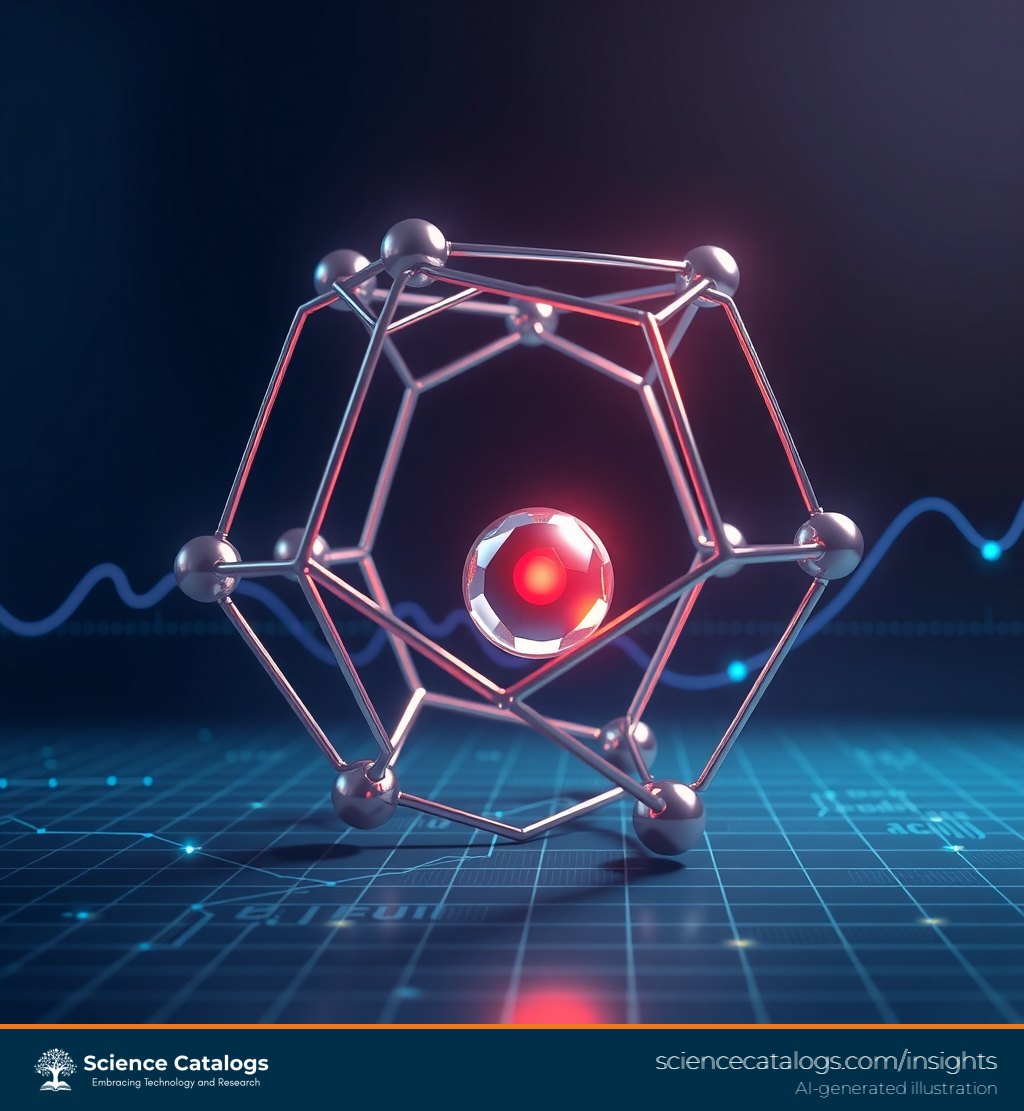
Researchers at TU Wien have built a machine-learning method that follows electrons as they hop between atoms in titanium oxide over periods more than a thousand times longer than conventional quantum-mechanical simulations can manage. According to the team, accuracy does not suffer significantly. The work, by Simon Trivisonne, Carla Verdi and Michele Reticcioli, appears in the journal ACS Nano.
Why electron position matters
Knowing where the atoms in a material sit is often not enough to predict how it behaves. Even when the atomic framework stays put, the distribution of electric charge can shift. An extra electron may become trapped on one atom, then jump to another. Such changes alter the forces between atoms and the chemical reactivity of the material, which is directly relevant when judging whether a compound could act as a catalyst.
Quantum-mechanical calculations can show where additional electrons prefer to sit and how they move. They are, however, so demanding that following these movements for any length of time is hardly feasible.
Where earlier machine learning fell short
Training an AI model on detailed calculations, then using it to predict new situations, is an obvious way round the cost. In practice, existing approaches struggle with electron motion inside materials. Reticcioli, of the Institute of Applied Physics at TU Wien, notes that they can return results that contradict observation. In titanium oxide, earlier methods could not reliably say whether it is energetically favourable for an electron to become trapped at a given atom.
The team identifies the cause as missing information. The earlier models knew the positions of all atoms but not which of them hosted an additional, localised electron. Without that, they could not predict the forces acting at the atomic scale dependably.
A task split between components
The new approach combines several parts. The model explicitly distinguishes atoms that host an extra electron from those that do not, which lets it estimate interatomic forces correctly. Two neural networks then share the work of simulating movement:
- one predicts when an electron is likely to leave its current position;
- the other assesses candidate destination atoms and decides where the electron is likely to be trapped next.
Together, these allow the method to simulate migration of electrons through the material. The authors report that this division of labour gave much better results than earlier machine-learning techniques.
Results for titanium oxide
The study focuses on polaron diffusion on the TiO2(110) surface, a well-known test system. Reticcioli says the model predicts the behaviour of titanium oxide far more accurately than before, and that some surface phenomena that had only been observed can now be explained for the first time. The source does not detail which phenomena these are, nor does it describe the benchmarks used to judge accuracy, so those points would need to be checked in the paper itself.
Implications and next steps
The team presents the work as an example of how human insight and machine learning can complement each other. Simply applying AI to a hard problem does not guarantee a useful answer; here, researchers broke the problem into smaller parts, and machine learning was then applied to those that suited it.
For computational materials scientists, longer simulations of charge localisation and transport could make it practical to study redox-active materials, including candidate catalysts, over timescales that were previously out of reach. The source reports results for one material system, so how well the approach transfers to other oxides or more complex surfaces remains to be demonstrated.
Source: AI simulates electron hops over far longer times than conventional quantum calculations (Phys.org, 28 November 2026).
Image: AI-generated illustration.
Working on this topic? Find a journal for your research or join the discussion on Scholars Post.