Hera's first images show DART left Dimorphos cratered, flattened and tumbling
 S
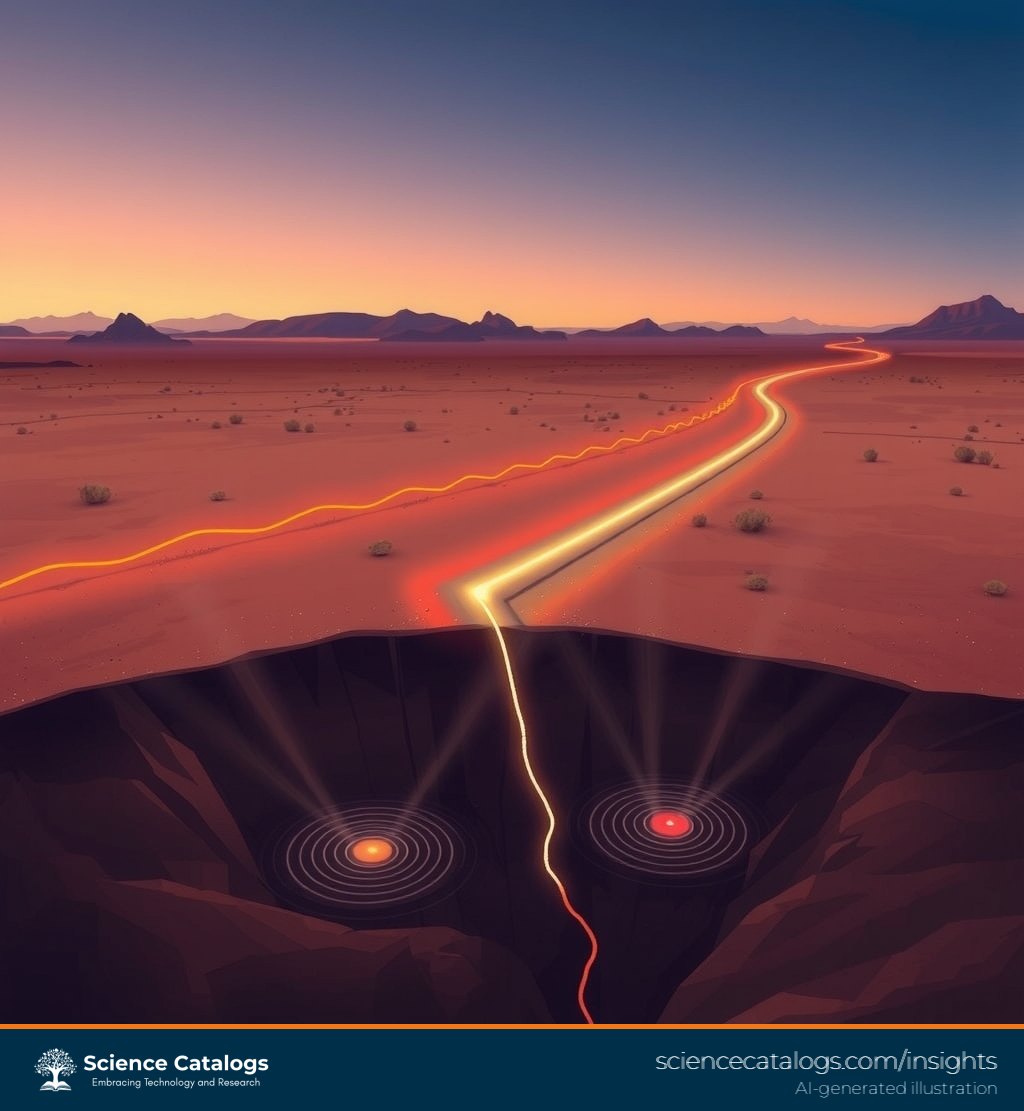
The European Space Agency's Hera mission has returned its first images of Dimorphos, the small asteroid hit by NASA's DART spacecraft in 2022. They show that the impact left a crater roughly the size of a sports stadium, spanning the asteroid's full width, and that Dimorphos is now tumbling erratically in its orbit. Hera has also found hundreds of previously unknown boulders, only a few metres across, circling the asteroid pair.
Settling a debate about the impact's effect
DART struck Dimorphos on 26 September 2022 and shortened its orbit around the larger asteroid Didymos by 33 minutes, far more than had been predicted. Telescopes on Earth could measure that orbital change, but not what the collision did to the body itself. Researchers had argued over whether Dimorphos gained a crater, changed shape or stayed much the same.
According to Hera principal investigator Patrick Michel, of CNRS and the Observatoire de la Côte d'Azur, the answer is a combination of the first two. The struck face has been flattened into a crater that extends across the whole asteroid. The remaining regions, covered in boulder fields, look much as they did in DART's own 2022 images, so the changes appear to be concentrated on the impact side.
A tumbling moonlet and a boulder swarm
As more images arrived, the team found that Dimorphos is not rotating in a steady manner. ESA Hera mission scientist Michael Kueppers said the impact has left it tumbling wildly in its orbit. Such behaviour is relevant to anyone modelling how an asteroid responds to momentum transfer, since the spin state after a deflection affects later observations and predictions.
The orbiting boulders were unexpected. Dimorphos measures about 151 m across and Didymos about 730 m, and the pair lies roughly 193.5 million km from Earth. The surrounding rocks are tiny by comparison. The mission team will need to account for them as Hera moves closer, since they could affect navigation and imaging.
How Hera is observing
The small-car-sized spacecraft is in an early characterisation phase, flying about 25 to 30 km from the asteroids. It uses thrusters to follow rectangular paths at an average speed of about 12 cm/s, reflecting the extremely weak gravity of the two bodies. Three instruments are in use:
- the Asteroid Framing Camera, which takes monochrome images;
- Hyperscout H, a multispectral imager that records 25 colours at once;
- the Thermal Infrared Imager (TIRI), supplied by JAXA, which measures surface temperatures.
What comes next
Hera is due to approach to about 13 km in December, returning images of progressively higher resolution. In January 2027 it plans to release two shoebox-sized CubeSats. The Luxembourg-led Juventas will use low-frequency radar to probe the interior of an asteroid for the first time and will eventually attempt a landing. The Italian-led Milani will study asteroid material and surrounding dust.
Together the three spacecraft are intended to give complementary measurements of the physical properties of the pair and of DART's aftermath. These data should help explain why the orbital change was larger than expected, and under what conditions deflection could be relied upon. The source reports first impressions only; detailed analysis of the crater, spin and boulder population has yet to be published.
ESA is also developing Ramses, in cooperation with JAXA, to study the asteroid Apophis during its close and safe Earth flyby on 13 April 2029, at about 32,000 km above the surface. Where Hera examines the result of a deliberate impact, Ramses will look at how an asteroid reacts to the gravitational pull of a planet, adding a second data set for planetary defence research.
Source: Hera reveals stadium-sized asteroid crater from spacecraft impact (Phys.org, 28 November 2026).
Image: AI-generated illustration.
Working on this topic? Find a journal for your research or join the discussion on Scholars Post.