Small RNA IroR helps a gut bacterium cope with iron scarcity and colonise mucus
 S
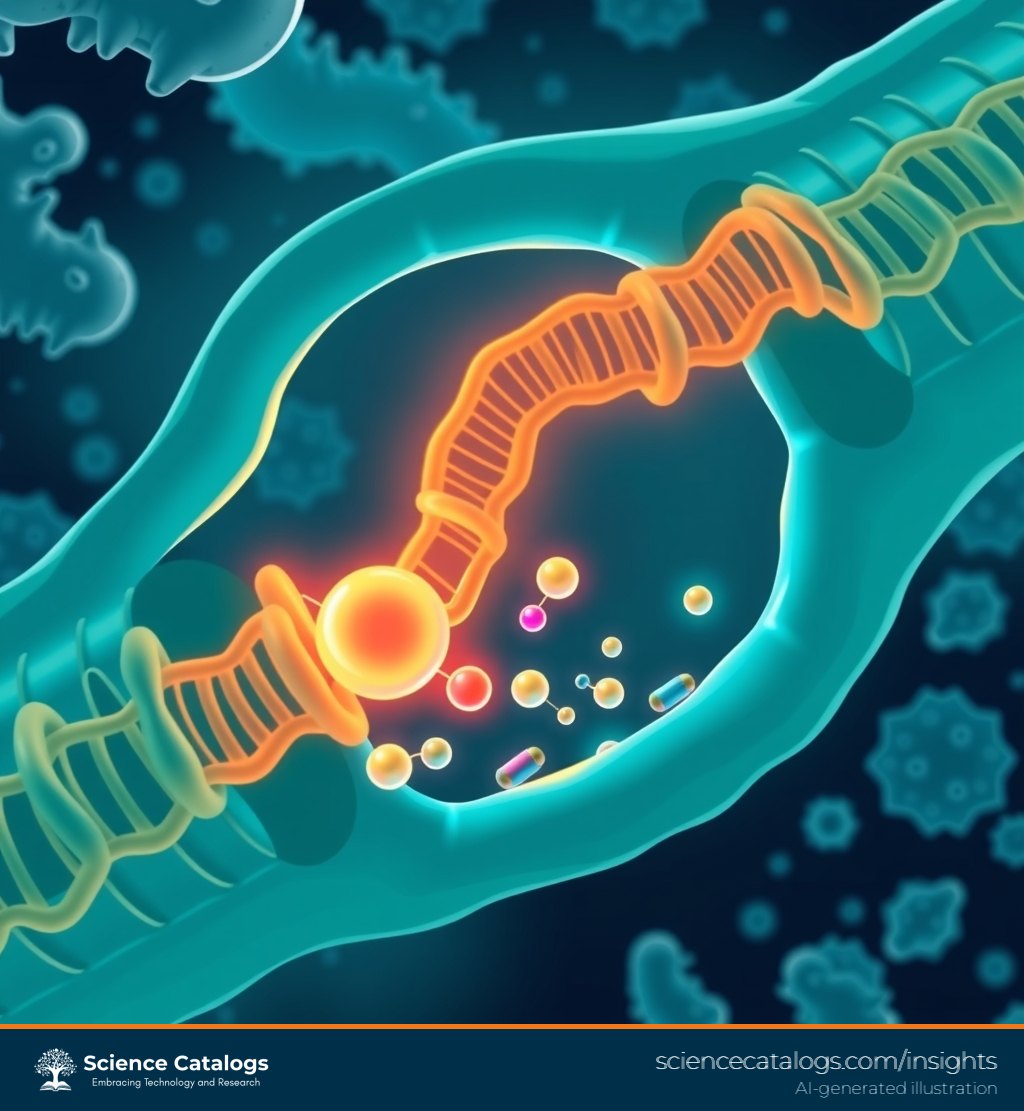
A team from the Helmholtz Institute for RNA-based Infection Research (HIRI), the University of Würzburg and Vanderbilt Health has identified a small regulatory RNA, named IroR, in the gut commensal Bacteroides thetaiotaomicron. The molecule responds to low iron and to mucus as a food source, and it switches on genes for using host-derived sugars. The work was published in Nature Communications.
Why the mucus layer is a difficult habitat
Gut bacteria do not all occupy the same space. Some drift in the lumen, while others sit within the mucus that coats the intestinal wall. Mucus-dwelling microbes face limited iron and scarce carbon sources, and they must modify their surface and metabolism to attach and persist.
Much of the research on gene regulation in the microbiota has focused on proteins. Small RNAs, which do not code for proteins but tune gene expression after transcription, have received less attention in commensals. They allow bacteria to change their physiology quickly, which makes them plausible candidates for fine control in fluctuating gut conditions.
A gut model with mucus and dual RNA sequencing
The researchers built an in vitro model of the human gut that includes a functional mucus layer. They applied dual RNA sequencing, which records gene activity in bacterial and host cells at the same time. This revealed IroR, along with other regulatory RNAs that were active specifically in the mucus-associated bacterial population.
The host side of the data was also informative. Unlike Salmonella, which provokes strong inflammation, B. thetaiotaomicron caused little damage despite direct contact with mucus. The host cells instead reinforced pathways that support the gut barrier, which the authors read as active tolerance of the commensal.
An RNA that switches genes on
Bacterial small RNAs more commonly suppress their targets. IroR does the reverse. It acts on messenger RNAs encoding functions for using host sugars, opening up RNA structures that would otherwise hinder ribosomes from starting translation. Senior author Alexander Westermann describes such activating mechanisms as unusual in bacteria.
Experiments in vivo added a further twist. A mutant lacking iroR outcompeted the wild-type strain. The authors interpret this as evidence that IroR does not simply boost fitness in one niche but manages trade-offs, for example between taking up iron and adhering to surfaces. Such balancing may help the bacterium cope with changing conditions along the gut, not only within mucus.
Implications for microbiome research
The authors point to a possible downside of the bacterium's sugar-scavenging ability. B. thetaiotaomicron is common in people eating a Western-style diet. When dietary fibre is in short supply, it can turn to mucus as food, which may weaken the protective layer and could contribute to inflammation and related disease. The study does not test this link in patients, and the findings come from a laboratory gut model and animal experiments rather than human trials.
Understanding how IroR integrates nutrient and iron signals could eventually help steer the bacterium's dietary preferences towards a more benign relationship with its host. Wenhan Zhu of Vanderbilt Health, who initiated the study with Westermann, frames the longer-term aim as learning the rules of microbial fitness well enough to predict and manipulate how microbiomes respond to diet, inflammation and disease.
Next steps
The group plans to examine variation among mucus-associated bacteria at the level of single cells. In parallel, co-first author Thomas Guest and colleagues are testing whether modifying IroR or other genes can direct B. thetaiotaomicron towards particular host niches. Such control would be a prerequisite for more precise, personalised microbiome-based therapies, though that goal remains some way off.
The paper, by Guest and co-authors including Gianluca Prezza and Ryan T. Fansler, is titled "A small RNA regulates iron homeostasis and host mucus colonization in Bacteroides thetaiotaomicron" (DOI: 10.1038/s41467-026-79554-x).
Source: RNA discovery reveals how gut bacterium adapts to life in intestinal mucus (Phys.org, 28 November 2026).
Image: AI-generated illustration.
Working on this topic? Find a journal for your research or join the discussion on Scholars Post.